



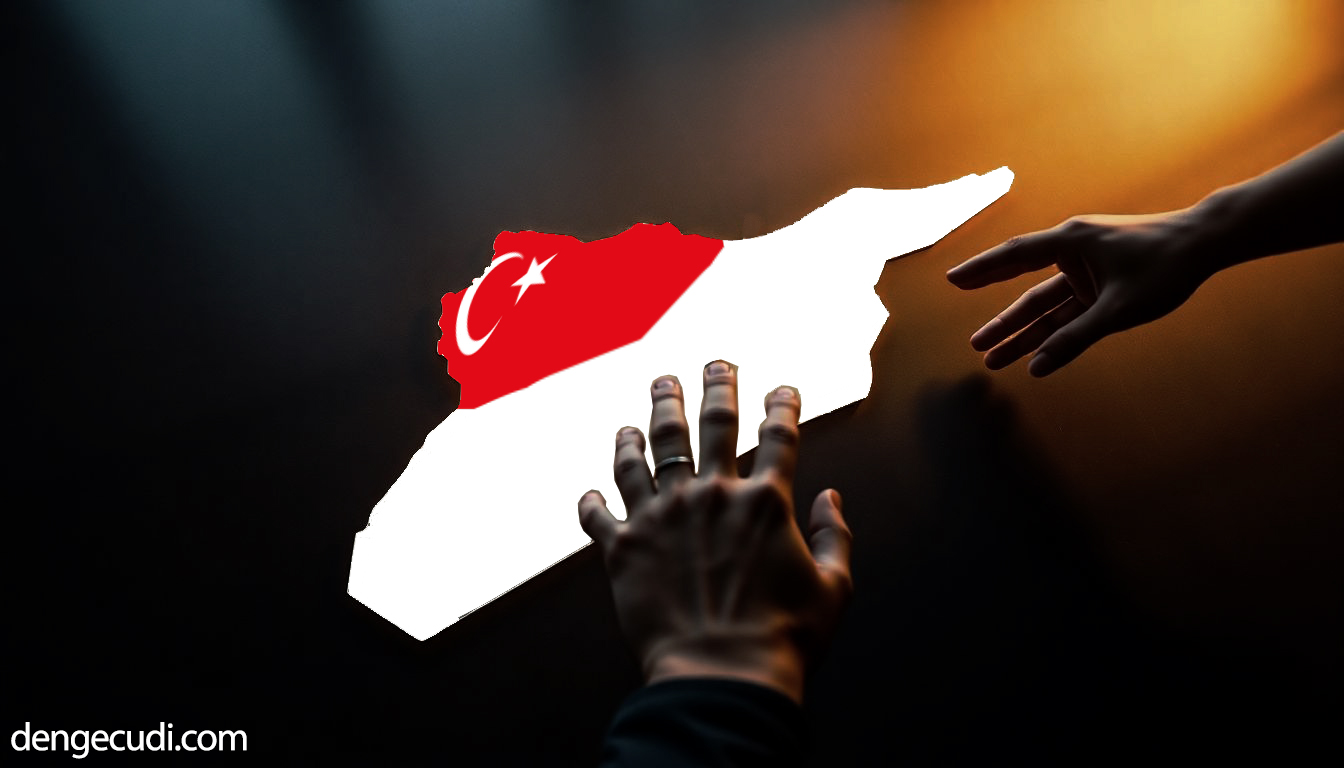
It is widely recognized that the Turkish occupation state seeks to fully establish itself economically in Aleppo under the framework of the National Pact (Misak-ı Millî). After the collapse of and Assad's authority, the Turkish occupying state, via HTS terrorist organization (Hayat Tahrir al-Sham), initiated the restructuring of all intelligence and administrative institutions in Aleppo and Damascus, especially in economic terms, including institutions such as post offices, telecommunications, and banks. Now, Turkey aims to completely control Aleppo’s industrial sector under the guise of economic and trade cooperation.
On this basis, on April 13, the Turkish governor of Antakya sent 16 Turkish industrial and economic figures to Aleppo. It was agreed during these meetings that old factories and workshops would either be renewed or rebuilt from scratch, and that these would be under Turkish company control for up to 15 years, formalized by a partnership agreement.
In this context, a production zone would be opened, and 75% of the production and revenues would go to Turkey.
For shops damaged in the war, loans would be provided at a 50/50 cost-sharing arrangement by Syrian and Turkish banks, and marble from Dîlok (Gaziantep) would be traded for the rebuilding of Aleppo.
After these meetings, the Turkish delegation visited Aleppo’s industrial zones in the Sheikh Najjar district, including factories producing iron, steel, cables, tractors, food, and clothing, and met with the so-called president of Aleppo’s Chamber of Industry. The delegation also visited industrial areas in Hama, Homs, and Damascus. A month earlier, Turkey’s Ministry of Trade had announced that Syrian and Turkish officials were in talks to reactivate the Free Trade Agreement and boost cooperation in transportation, military logistics, and imports/exports.
CALL TO FORMALIZE THIS PLUNDER
Following the industrial overture in Aleppo, on May 6, the Turkish occupying state sent a delegation to Damascus through its economic and industrial institutions with the goal of legitimizing this plunder plan. This delegation included many business leaders from Turkish cities. Discussions focused on logistics, customs, and financial barriers under the pretext of reactivating the Free Trade Agreement. A draft agreement was prepared for signature by both the Turkey and HTS.
TURKEY’S ROLE IN DESTROYING SYRIA’S INDUSTRY
The Syrian civil war, which began in 2011, devastated the country’s industrial infrastructure. Factories, warehouses, and production facilities were systematically bombed, looted, and destroyed. According to the UN Economic and Social Commission for Western Asia (ESCWA), industrial production dropped by 70% since the war began. Aleppo, previously Syria’s industrial heart, was heavily damaged. Textile, food production, and engineering sectors were destroyed; basic services like electricity and water collapsed, and manufacturing became nearly impossible.
The post-war Syrian economy is in deep crisis. Farmland was abandoned, and industries struggled to recover. Turkey intervened not as a helper but as an occupying force pursuing its own interests. Turkey expanded its influence in northern Syria, took control of trade, redirected agricultural production to itself, and reaped most of the benefits of local industry. Turkish goods flooded Syrian markets, natural resources were looted, and Ankara restricted the movement of goods across borders, imposing economic dominance.
Evidence shows Turkey played an active role in the destruction of Syrian industry. Factories in Aleppo and other areas were looted by Turkish-backed terrorists. For example, machinery worth more than $100 million was stolen from Aleppo and taken to Turkey. If verified, this practice shows that Turkey dismantled Syria’s production base. Syrian companies that once operated independently are now subordinated to Turkish businesses. A World Bank report in February 2023 stated that losses in 14 cities and major sectors since 2011 amount to $11.4 billion.
After the Assad regime collapsed on December 8, Turkish construction, cement, and steel companies grew between 5–10% in December 2023, 20% in January 2024, and 38% in July 2024. In the reconstruction sector, Turkey benefited the most:
In this context, a production zone would be opened, and 75% of the production and revenues would go to Turkey.
For shops damaged in the war, loans would be provided at a 50/50 cost-sharing arrangement by Syrian and Turkish banks, and marble from Dîlok (Gaziantep) would be traded for the rebuilding of Aleppo.
After these meetings, the Turkish delegation visited Aleppo’s industrial zones in the Sheikh Najjar district, including factories producing iron, steel, cables, tractors, food, and clothing, and met with the so-called president of Aleppo’s Chamber of Industry. The delegation also visited industrial areas in Hama, Homs, and Damascus. A month earlier, Turkey’s Ministry of Trade had announced that Syrian and Turkish officials were in talks to reactivate the Free Trade Agreement and boost cooperation in transportation, military logistics, and imports/exports.
CALL TO FORMALIZE THIS PLUNDER
Following the industrial overture in Aleppo, on May 6, the Turkish occupying state sent a delegation to Damascus through its economic and industrial institutions with the goal of legitimizing this plunder plan. This delegation included many business leaders from Turkish cities. Discussions focused on logistics, customs, and financial barriers under the pretext of reactivating the Free Trade Agreement. A draft agreement was prepared for signature by both the Turkey and HTS.
TURKEY’S ROLE IN DESTROYING SYRIA’S INDUSTRY
The Syrian civil war, which began in 2011, devastated the country’s industrial infrastructure. Factories, warehouses, and production facilities were systematically bombed, looted, and destroyed. According to the UN Economic and Social Commission for Western Asia (ESCWA), industrial production dropped by 70% since the war began. Aleppo, previously Syria’s industrial heart, was heavily damaged. Textile, food production, and engineering sectors were destroyed; basic services like electricity and water collapsed, and manufacturing became nearly impossible.
The post-war Syrian economy is in deep crisis. Farmland was abandoned, and industries struggled to recover. Turkey intervened not as a helper but as an occupying force pursuing its own interests. Turkey expanded its influence in northern Syria, took control of trade, redirected agricultural production to itself, and reaped most of the benefits of local industry. Turkish goods flooded Syrian markets, natural resources were looted, and Ankara restricted the movement of goods across borders, imposing economic dominance.
Evidence shows Turkey played an active role in the destruction of Syrian industry. Factories in Aleppo and other areas were looted by Turkish-backed terrorists. For example, machinery worth more than $100 million was stolen from Aleppo and taken to Turkey. If verified, this practice shows that Turkey dismantled Syria’s production base. Syrian companies that once operated independently are now subordinated to Turkish businesses. A World Bank report in February 2023 stated that losses in 14 cities and major sectors since 2011 amount to $11.4 billion.
After the Assad regime collapsed on December 8, Turkish construction, cement, and steel companies grew between 5–10% in December 2023, 20% in January 2024, and 38% in July 2024. In the reconstruction sector, Turkey benefited the most:
Machinery: +244%
Cement, glass, ceramics: +92%
Fruits and vegetables: More than triple
Cement, glass, ceramics: +92%
Fruits and vegetables: More than triple
This situation shows Turkey not only profited from Syria’s crisis but also systematically imposed economic dominance, threatening Syria’s sovereignty and economic independence.
TURKISH COMPANIES ADVANCE TO SEIZE SYRIAN INDUSTRY
Pasifik Euroasia, a major logistics company, is expanding its terminals in Iskenderun (Hatay) and Mersin to manage Syria-related operations. Catoni Group, a shipping firm, works with shipowners seeking new construction materials. New development projects worth $400 billion, including infrastructure, power plants, and logistics, are being planned. Turkish ports and transport networks are becoming central hubs for Syria’s exploitation.
Construction and materials firms such as Oyak Cement, Çimsa, Limak Cement, and Enka İnşaat have increased their activity in Syria since December 2024, following Assad’s regime collapse and the formation of a HTS Al-Julani leadership. Turkey has begun projects in roads, dams, power plants, grain factories, and warehouses in Aleppo and Damascus to dominate Syria’s economy.
Turkish Airlines, after 13 years, resumed flights to Damascus. Dîlok (Gaziantep), a border city, has become an industrial hub hosting companies in steel, construction, and food. Many Turkish companies are opening trade offices there. Last month, Turkey sent a team of 25 technicians to Syria to work on rebuilding Damascus International Airport.
Ethan Bright, an economist at Oxford Economics, predicted that Turkish exports to Syria will increase by more than 90% this year and exceed $20 billion by 2028. Meanwhile, Saudi Arabia’s El-Jouf Cement Company signed a $10.1 million deal to supply cement and clinker to Syria.
Beyond strengthening political ties, Turkish exports to Syria tripled last month. During Al-Julanis recent visit to Ankara, he discussed economic relations and Turkish companies' expansion plans in Syria.
According to the Turkish Manufacturing Assembly, exports to Syria increased by 20% in December 2024 and by 38% in January 2025. Turkey established a buffer zone at the Bab al-Hawa border gate, where Turkish trucks transfer goods under the pretense of security measures, but reliable sources confirm Turkish trucks now freely enter and exit Syria.
TURKEY’S POST-WAR PLANS IN SYRIA
Turkey is reinforcing its economic presence in northern Syria to achieve several goals:
1. Strengthen its military and strategic influence in occupied areas of northeastern Syria.
2. Secure materials needed to repatriate Syrian refugees from Turkey to these areas.
3. Deepen its engagement with local councils and municipalities to increase Turkish companies' participation in reconstruction projects and gain trade advantages.
4. Ensure its long-term presence in Syria with the belief that this will enhance its de facto control and future political and territorial gains.
Pasifik Euroasia, a major logistics company, is expanding its terminals in Iskenderun (Hatay) and Mersin to manage Syria-related operations. Catoni Group, a shipping firm, works with shipowners seeking new construction materials. New development projects worth $400 billion, including infrastructure, power plants, and logistics, are being planned. Turkish ports and transport networks are becoming central hubs for Syria’s exploitation.
Construction and materials firms such as Oyak Cement, Çimsa, Limak Cement, and Enka İnşaat have increased their activity in Syria since December 2024, following Assad’s regime collapse and the formation of a HTS Al-Julani leadership. Turkey has begun projects in roads, dams, power plants, grain factories, and warehouses in Aleppo and Damascus to dominate Syria’s economy.
Turkish Airlines, after 13 years, resumed flights to Damascus. Dîlok (Gaziantep), a border city, has become an industrial hub hosting companies in steel, construction, and food. Many Turkish companies are opening trade offices there. Last month, Turkey sent a team of 25 technicians to Syria to work on rebuilding Damascus International Airport.
Ethan Bright, an economist at Oxford Economics, predicted that Turkish exports to Syria will increase by more than 90% this year and exceed $20 billion by 2028. Meanwhile, Saudi Arabia’s El-Jouf Cement Company signed a $10.1 million deal to supply cement and clinker to Syria.
Beyond strengthening political ties, Turkish exports to Syria tripled last month. During Al-Julanis recent visit to Ankara, he discussed economic relations and Turkish companies' expansion plans in Syria.
According to the Turkish Manufacturing Assembly, exports to Syria increased by 20% in December 2024 and by 38% in January 2025. Turkey established a buffer zone at the Bab al-Hawa border gate, where Turkish trucks transfer goods under the pretense of security measures, but reliable sources confirm Turkish trucks now freely enter and exit Syria.
TURKEY’S POST-WAR PLANS IN SYRIA
Turkey is reinforcing its economic presence in northern Syria to achieve several goals:
1. Strengthen its military and strategic influence in occupied areas of northeastern Syria.
2. Secure materials needed to repatriate Syrian refugees from Turkey to these areas.
3. Deepen its engagement with local councils and municipalities to increase Turkish companies' participation in reconstruction projects and gain trade advantages.
4. Ensure its long-term presence in Syria with the belief that this will enhance its de facto control and future political and territorial gains.